Showing posts with label politics. Show all posts

Monday, 18 August 2025

Not Offloading much (day 19)

 
Having worked the entire of July without a break I finally got the day off on Friday ... and spent it cleaning the house. I got up early, cleaned Tomoya's room (very thoroughly, even dusted the bookshelves) then hoovered my office and down the landing, bumped the tall mirror that stands against the wall and shattered it into huge lethal pointy bits and equally dangerous tiny shards. After cleaning it up very thoroughly I moved on to clean the bathroom, then hoover my room, down the stairs, the hallway, living room and kitchen. I cleaned my lovely new front door and hoovered the porch (considering repainting the blue as not sure it goes well with the red).

Then I unblocked all the drains, including removing the kitchen U-bend, ran the hot water cleaning cycle on the washing machine and cleaned the filter. I put the hall rug to soak in the bath and washed the sofa cushion covers. Finally I cleaned out the worms and gave them new 'bedding'. In between I chatted to both Monkey and my sister, handed my telly off to Curry's to fix the DVD player, went to the library and the garden centre for a washing liquid refill, then to Dunk's for afternoon cuppa. So I was pretty smug and satisfied with the result by the end of the day and am free to ignore all domestic chores for a month.


Tish came across 'The Living Sea of Waking Dreams' by Richard Flanagan (Booker prize winner, but not this novel) and recommended it to me, which is nice because it's not something she's done before, we have quite different reading tastes. More weird shit. But in a different way. I ached for Anna's mother through the whole book, and had quite a chat with Monkey about the whole 'assisted dying' thing, which is linked in with this whole notion of keeping someone alive by force rather than allowing death to come naturally, (though not the same thing of course). Anna's mother Francie has multiple health problems and one son, Tommy, (with different kinds of problems) who lives nearby and cares for her. Her other son Terzo and her daughter Anna live further afield and prefer to just throw money at 'the problem'. When the doctor tentatively suggests that keeping her 'comfortable' is the best way to go Terzo goes apeshit and uses all his money and influence to get them to keep his mother hanging on by a thread, suffering. I hated him. Anna seems to then drift in to this dreamlike existence of sitting with her dying mother, almost as an excuse to escape her stressful life. And then the weird shit starts, and bits of her body start disappearing. And people don't seem to notice. I thought at first it was her imagination, but the body parts seem to be really gone. Then other people start losing body parts, including her son, who eventually becomes just a few fingers that continue to play video games in his darkened bedroom (see what I mean ... weird shit). 
And ... then there's the social media addiction and the horror of the destruction of the natural world, wildfires and ... and ...
The chat with Monkey also veered into the value of human life. How all human life is equal, but not. Valuable but also cheap and disposable. People are dying all the time. Huge amounts of money might be spent to save one person, like a child fallen into a well, or millionaires in a submarine that might or might not have exploded, but people drowning in the Channel or dying of starvation in Gaza are somehow not saveable. This book raised all those questions as the reader watches this rich man demand that his mother is kept alive at all costs. 

One of several quotes that often read more like someone's brain racing through thoughts, loved the word, Solastalgia:

"She googled vanishings. Nothing. She posted a penguin meme she couldn't hold her thoughts she couldn't read she clicked through smoke sending people crazy it triggers anxiety a professor said it's like war the enemy is attacking the city we don't know where the enemy is. The planet's life support system may collapse flat earth believers now number millions new words for a new age, reads a meme. Pyro-cumuloniumbus giant fire-generating clouds sixteen kilometres high creating more fire through lightening, ember attacks, wind, fire tornadoes. Omnicide. Solastalgia emotion induced by the loss of everything. What is the image for nothing? Where is a language she thought she didn't she tried Insta again it loaded. So much joy! Instagram, blessed Novocaine of the soul! Foodholidayssmilinggroupsshopping. She had to get off. She knew it. She had to get off." (p.103)

A very 21st century book, all the world's modern day problems encapsulated here. Sometimes I find the stories of tiny, tiny wins against the massive destruction more depressing than uplifting. But like the anti nuclear movement previously said, Protest and Survive.

Stay safe. Be kind. Don't be a fascist.

Thursday, 7 August 2025

Hiroshima Day


This year marks the 80th anniversary of the dropping of the atomic bombs on Hiroshima and Nagasaki. In excess of 200,000 people were killed, in the immediate blasts, in the aftermath and of longer term radiation sickness and cancers. The people of Hiroshima and Nagasaki remember, and so should the rest of the world.
Stay safe. Be kind. Never again.

Monday, 28 July 2025

Stop and Think it Over


I intermittently contemplate giving up the blog. I struggle to express myself because I can't think of a reason why anyone would listen to me. It all feels a little pointless and self indulgent in the face of wars, global climate change and the terrifying rise and normalisation right wing ideology. I am horrified by the state of the world, so much death and destruction in Gaza, and governments acting in the last few days as if they only just noticed it was happening. I write to my MP and donate money but the bigger it is the more insignificant your efforts feel.  What else is there to do.

But I am an unremitting optimist ... and so I stop and think it over.
The basil is growing well this summer. I may have another go at making pesto ... 
Stay safe. Be kind. Don't be a fascist. 

Sunday, 25 May 2025

5: Enter Ghost

I picked 'Enter Ghost' by Isabella Hammad from the Women's Fiction Prize shortlist from last year, and it sat waiting for quite a long time. It follows Sonia as she returns to her homeland of Palestine after a long time living in London, reconnecting with her sister and her country. It is set in 2017 and so very much predates the current violence but as I read you feel aware all the time of the tension between the residents of the West Bank and the occupying Israeli forces. Sonia is an actor and, lacking anything particular to spend her time on, she ends up joining a theatre group staging Hamlet in Arabic. Much of the story is taken up with the relationships within the group of actors and watching them rehearse. It was a serious read, lots of literary references, that would no doubt mean more to someone familiar with the play, I often felt I was missing something more subtle. It's very much a book about identity and sense of belonging. And yet also there is also an atmosphere of weary resignation amongst the Palestinians, of acceptance of the restrictions imposed on their lives and the pointlessness of resisting them.

Couple of long quotes, the first really struck me, an incident where they pull up at a checkpoint that bought home the tension of the whole situation:

"One foreign national with an Arab name, two Palestinian citizens of Israel and one West Bank resident with a temporary permit sit in a car with yellow Israeli plates approaching a checkpoint. The line is sluggish: the soldiers are investigating every vehicle, regardless of the number-plate colour. Near the windowless tower, a shabby Israeli flag roils on the wind, looking not at all like those forlorn fraying Palestinian flags that, once illegal but now par for the course, adorn electricity pylons across Ramallah, but rather somehow eternal and careless, a mark of the ragged outposts of empire. Part of the checkpoint itself is surrounded by scaffolding, and the red plastic webbing around the base has broken down, the stick supports in the corners pointing at odd angles. A tap on the driver's window: a slender soldier bends over wearing a very large green helmet like an upside-down basket. He has blond eyelashes. A typical rigmarole of identification cards and passports ensues, conducted in Hebrew with the driver. Then the soldier points at the youngest of the men, the West Bank resident, sitting in the back. Hebrew switches to Arabic. The soldier tells him to get out of the car.
'I have a permit,' says the young man.
'He has a permit,' repeats the woman driving.
Another soldier appears on the other side of the car. He opens the rear door and orders the young man out; the threat has materialised so quickly, unspoken, that if he does not comply they will force him out. Wael gets out. The soldiers escort him into the building at the checkpoint.
As they are passing through the doorway, the blond soldier taps him on the back of the head, and Wael's shoulders flinch into an automatic hunch. It is as though the scene is being played out on a roll of film, from which this frame onward has been bleached.
I was hardly aware of my body as I thrust my door open. I only knew my vision filled with white. And now I was outside, and the morning air was cool on my face and hands. Propelled by an alien force I marched over the uneven, untended terrain that preceded the checkpoint, the rubble and trash and random horizontal blocks of concrete, towards another soldier now standing to attention with his gun ready. Dimly conscious that Mariam and Ibrahim were shouting at me from the car windows, Come back, Sonia, come back, the crucial thought swooped through my mind that the soldier might suspect I had a knife, a suspicion I knew was grounds for shoot to kill, and although my ability to pass as a foreigner might offer me some protection I nevertheless dropped my pace and lifted my arms to make clear that my hands were empty. Rage was making me vibrate. Strangely, as I neared him, the soldier turned to one side, as if to ignore me, except that his hands were on his weapon and he looked ready to use it. He was young, probably eighteen or nineteen. Perhaps he didn't know how to respond to this situation, the approach of a possibly raving woman in white linen trousers and Converse sneakers. He spoke rapidly into his walkie-talkie. Oh god, what am I doing? I thought, and then said loudly in English: 'Where have you taken my son?' The voice came from somewhere other than my mouth, somewhere further away." (p. 153-154)

It is another feature of the book that she frequently finds herself observing, as if she is not part of the scene. And lots of theatre-y language and references, and some of the 'scenes' between the characters are written in the form of a play. It is designed to make you aware of the very fine dividing line between reality and performance; how much of the time we are all playing parts. Here they are seeing the outdoor set that has been constructed for the performance for the first time, having just heard the news that a cast member has received an interrogation order. Where earlier Sonia had been outraged and forthright, here she seems to have accepted that control over her actions is limited:

"Jenan and Wael returned to their positions to complete the dialogue. Both looked rattles, particularly Jenan, which was understandable: she'd just joined us, she was feeling out our dynamic, and now not only was a new dynamic hatching but a threat had materialised of interrogation, of danger. Of dissolution, even. As far as I was concerned, if the Israelis really made an effort to stop us it would not be worth the fight. We were mere human beings, there was only so much we could do. The only person who didn't look unnerved was Mariam, who stared at her actors as though with the force of her gaze she could make them more sturdy. I had a feeling I sometimes get when I drink too much coffee, which was that while standing still, watching Jenan and Wael, another more agitated Sonia was wriggling inside my skin, trying to get out. I was thirsty as well and I needed the loo, and in this state of physical discomfort something strange happened. My viewpoint switched, and as though I were in a dream and my perspective had been breached I moved like a surveillance drone and saw our project from above, situation fragilely in time and place, this summer, this side of the wall. Accompanying this vision was a fear, almost a premonition, that it was all foretold anyway, everything had been decided in advance, we were only acting parts that had been given to us, and now some inexorable machinery was being set in motion that would sooner or later throw our efforts out into the audience, dismantle our illusions, and leave us cowering before the faceless gods of Fate and State." (p.223-224)

Seriously thinking about making some fatet betenjan.

Stay safe. Be kind. See you tomorrow.

Monday, 27 January 2025

Holocaust Memorial Day

The word Nazism is being bandied about a lot at the moment. Today it is important to remember what it really means and where it leads. We must remember the millions of Jews who were murdered. The world must stand fast against ideas that dehumanise any group of people. The richest man on the planet stood up and made a nazi salute a few days ago ... and the world's press tried to pretend it didn't mean anything. Even the Guardian. I was so angry I wrote a letter, which they chopped right down before they published it. 

"It was a nazi salute. It did not ‘appear’ to be. It was not ‘fascist-style’. He knew exactly what he was doing. Even the Guardian, somehow, could not bring themselves to call it like it is. We must not normalise or excuse this behaviour. We must challenge it at every turn."

Stay safe. Be kind. Never forget.

Saturday, 4 January 2025

On Tyranny

After the American election lots of people started mentioning 'On Tyranny' by Timothy Snyder, written in 2017 during the first Trump administration, many of them quoting the first lesson: "Do not obey in advance. Most of the power of authoritarianism is freely given. In times like these, individuals think ahead about what a more repressive government will want, and then offer themselves without being asked. A citizen who adapts in this way is teaching power what it can do." 

I have been listening to Lord of the Rings on Youtube (for the third time) and at one point Frodo laments that the task has fallen to him, how hard it is to be living in such dark times. Monkey is currently on Okinawa and went today to the memorial to the 200,000 people who died in the Battle of Okinawa in 1945. I found myself very moved by the photos she sent. I guess many people never realise at the time that they are part of a dark time in history, nor the role they may have played. 

Timothy Snyder ends his lessons with this one and it left me feeling overwhelmed but also heartened to think that throughout history people have been prepared to die for their freedom, and wondering about my own courage:

"Be as courageous as you can. If none of us is prepared to die for freedom, then all of us will die under tyranny."


Tuesday, 8 October 2024

Cold Crematorium

'Cold Crematorium' by József Debreczeni was first published in 1950 and has only recently been translated into English. It describes the author's period of internment in Auschwitz by the Nazis. I am finding it hard to get to grips with writing about the book given the current world situation. I think (but what do I know) that understanding the depths of the Holocaust can't help but inform your understanding of current events. The Nazis tried to erase the Jewish people. The life that Debreczeni describes encapsulates absolutely Hannah Arendt's 'banality of evil'. This article in the New Statesman describes how survivor testimony was not admitted at the Nuremberg Trials because they thought people would not be believed. 
As a young healthy man he was sent to a work camp, as were a constant stream of people, who were quite simply worked to death. He describes the day to day struggle for survival and how accustomed they become to death and suffering. Although the worst of the guards are talked about it is the life amongst the other prisoners that he gives in detail. The system undermined them still further from common or garden dehumanisation by setting them in a hierarchy, giving some privileges over others, control over food distribution and the allocation of sleeping space, designed presumably to create hatred amongst the inmates, to divide them from each other. It sometimes seems amazing that the people are alive at all. The cold and hunger and random violence. The book is very immediate, immersing the reader in the situation. It feels very detailed, and you wonder as his powers of recall, because how could he have possibly written anything down at the time. It is the individual incidents that make it so graphic. 

"'Schon [Nice]. Who is your best worker?'
'46514!' the kapo exclaims without hesitation.
46514 is unarguably the group's best worker. Back home he'd been a logger. Twenty-six years old. Nothing of his round sunburnt peasant's face suggests Jewish ancestry. Not at all the spindly, bookish type more familiar back home. |That variation that even Jews themselves hardly recognise. In the Carpathian Mountains, there's a healthier degree of occupational diversity among the Jews. Those doing work do it for the sake of the work itself. It's obvious from the way they hold their tools.
46514 is a premium häftling. Premiums are rare; to be recognised as one is a big deal. A premium gets a weekly bonus with two marks, which he can trade in for special jam and makhorka cigarettes.
46514 jumps out of the pit and snatches off his cap.
Half Arm casts him a glance but asks him nothing, and then steps to the side. He reaches lazily for his holster, pulls out the revolver, and presses the barrel to 46514's temple. A shot rings out. The man, who'd been standing straight as a flagpole, now teeters before crashing facedown into the pit.
The lifeless body plops with a dull thud. The officer with the Leica puts the camera into a pocket, while Half Arm smiles silently, absentmindedly.
'A little demonstration,' he says. 'An example of how even the best Jew must croak.'
Kitsch. Horror is always kitsch Even when it's real." (p.98-99)

They live for cigarettes and news of the war. They are moved to other camps, sometimes volunteering to do so since people reason that it can't possibly get worse. It is towards the end of the war so the Nazis are withdrawing the prisoners, food gets more scarce and typhoid runs rampant, until the point where they awake one day to find themselves free, the guards having abandoned them in the night fearing the advancing Soviet army. 

"Night in Dornhau
Six hundred men are pressed tightly against each other. Every third one is writhing, whimpering, groaning, gurgling, raving. Every third person is dying.
Some are whining for doctors deliriously, stubbornly - more to themselves than to anyone else. The thin tailor above me thinks he is at home, talking to his little boy. By tomorrow, he won't be around, knitting caps in exchange for soup from well-heeled bigwigs.
Above me, under me, all around me, this army of people ready to depart are crying out for God and water. Eyes turning glassy are soaking in the darkness of Hades or the foolish pinkness of heaven. Death is stepping between the bunks like a learned, confident young professor feeling quite at home.
The wailing is contagious. Like dogs howling at the moon, all six hundred of us are aimlessly whining away. A choir of raving flagellants.
The icy granary with the broken windows resounds with eerie voices and shrieks of despair, horror, and fear.
This concert of outcasts lasts until the wee small hours of the morning, when the first grey filters in. Then, silence. Without warning, without reason, just as the uproar started earlier.
Two hundred die in one block that night.
As daybreak takes hold, the bunks fall silent. The dead and the living alike doze off." (p.161)

There are moments of humanity where people offer some care to others but you sense that mostly each person is alone in his own living hell. József himself lurches between fatalism and despair, and a burning desire to survive. Human beings are capable of such terrible things and you find yourself crushed by the soul destroying inhumanity and reminded of the urgency of the message that the Holocaust must not be forgotten. 
Post script: Thinking more about what I was trying to articulate about my response to the book. The recent resurgence of far right political parties and ideology across Europe (including Germany) and coming out of the mouth of a US presidential candidate, is enough to make any normal person's blood run cold, but for Jewish people must evoke a very visceral level of threat. What is currently happening in Israel/Gaza/Lebanon is clearly not a solution to the security of the region, when all of the shooting is over the human beings still have to live alongside each other. I am left wondering what we can do. My heart cries out for the people dying on both sides, whose lives are being destroyed by ideologues.

Friday, 5 July 2024

The Magic of Democracy


After the terrifying judgement by the United States Supreme Court last week the election results that arrived overnight bring a welcome feeling of relief. I was struck by the brief acceptance speech by Jeremy Hunt when he reflected on the peaceful transfer of power that has happened here compared to elsewhere in the world where violence can sometimes be a more common method. I feel proud to live in a country where we mark our crosses and accept the decision of the majority, and nobody cries foul. I can only hope that the same will be true in November when the Americans go to vote.

Stay safe. Be kind. Celebrate the wins.


Thursday, 4 May 2023

Wednesday, 8 March 2023

International Women's Day

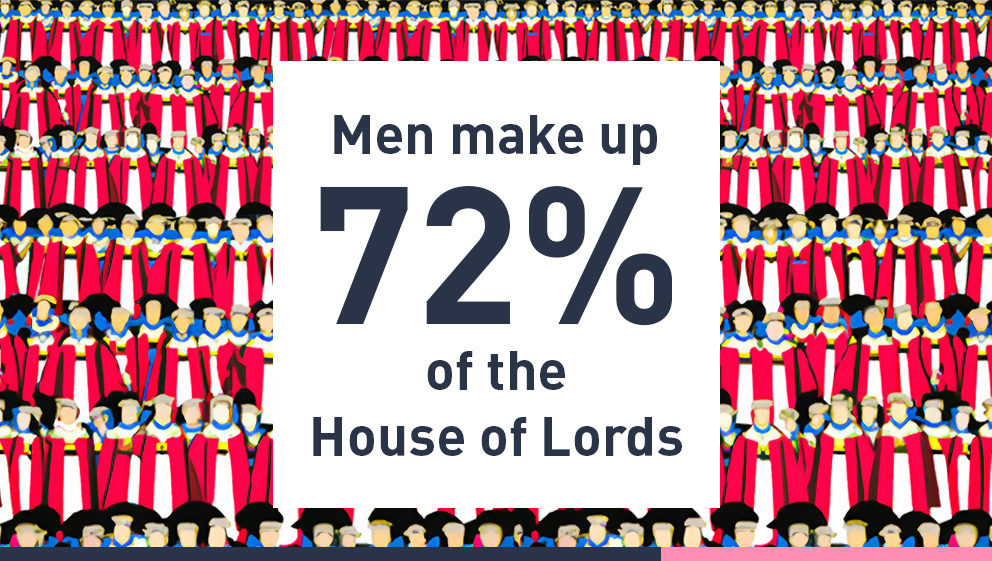
The move towards decent representation of women in our government is painfully slow. The Electoral Reform Society currently has a petition running to demand proper reform of the upper chamber. Perhaps if more women are making policy the impact of decisions on women will be better reflected. 
At the other end of the situation I read an interesting interview with Laura Bates yesterday talking about the daily experience of girls and young women and how internet misogyny is having a huge impact on their lives. The whole school uniform debate seems so small in relation to the problems that women around the world face but it become a microcosm of the way society views women's responsibility for their mere presence in the world.
Stay safe. Be kind. Take a stand or donate on International Women's Day
(maybe Women for Women International which supports women recovering from conflict.)

Saturday, 4 February 2023

Billions


So 'Capitalist Makes Profit' is not much of a headline. It's what they're meant to do. Over the years and decades the profits have got bigger. They make millions in profits ... they make hundreds of millions in profits. For the rest of us the numbers become meaningless. We are all too busy wondering why the income we have this year buys us less stuff than what we earned last year. People are outraged that Shell has announced $40 billion in profits. The 'cost of living crisis' does not seem to touch people at that end of the capitalist system. I was perturbed by the way we have moved from millions to billions and it seems to have the effect of minimising the 'number' that represents the profits. 
40 is quite a small number.
So this post is remind you to remember that the reality of Shell's profits is
40,000,000,000
(Forty Thousand Million)

Stay safe. Be kind.

Saturday, 10 December 2022

Christmas Posting Advice 2022

Further to my decade old post on Christmas posting advice I have some additional important messages.
Don't post anything this Christmas.
Get up, put your coat on and go to a real shop.
Buy presents, wrapping paper and sellotape.
Come home, wrap presents, give them to people.
Don't order something online and expect it to arrive on time,
chances are pretty high that it won't.
(Don't come into the callers office and ask me where it is either.)
Even Special Deliveries are arriving late.
For friends and family far away give a charity donation to a cause close to their heart.
Strikes are planned for 14th, 15th, 23rd and 24th December.
I was hoping they were bluffing and would call them off, but that seems unlikely.
I am very stressed by what is happening but have no means to affect the situation.
Don't cancel Christmas just because pressies are missing, try and enjoy what you have with the people you love, get a big bottle of Baileys and settle in for the weekend.
(Well that's my plan anyhow.)

So apparently 17,500 people gathered in Parliament Square yesterday, that's over 10% of the workforce. We took an impromptu march down to Buckingham Palace, but the Manchester South contingent headed back for our bus just before the police arrived.
Here is little me being interviewed by a nice french journalist:
Stay safe. Be kind. Stand for something, or you'll fall for anything.

Thursday, 7 July 2022

Integrity

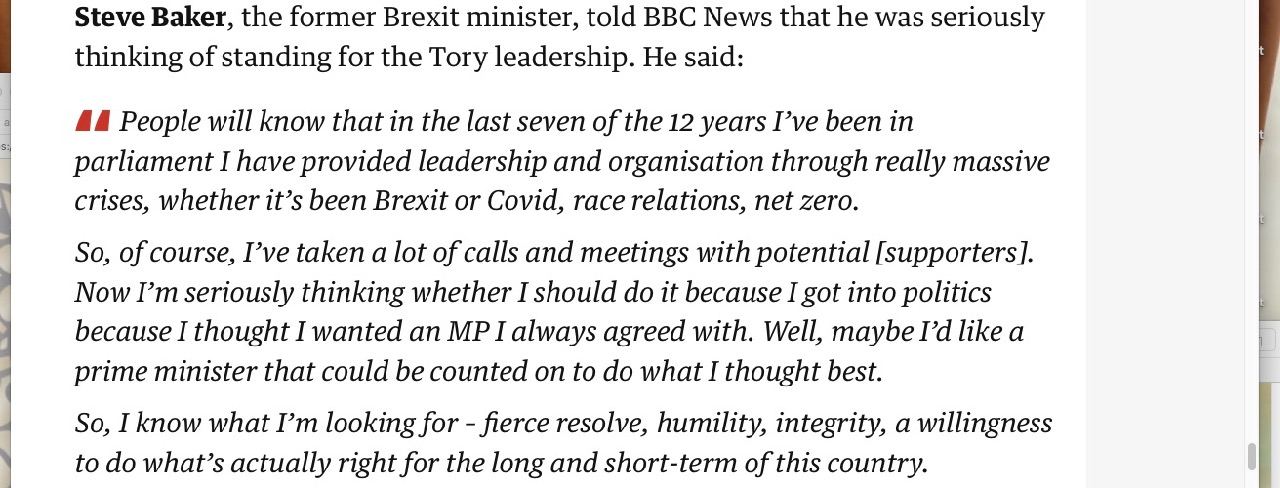
Many, many Conservative MPs have been learning to use a new word in the last 24 hours. I wonder if they had to look it up, to check how it might apply to the behaviour of the leader they have supported over the last however-many-years of lying and evasiveness and inability to take responsibility for fuck-ups. Now they just seem like rats leaving a sinking ship. There is not one ounce of integrity amongst the lot of them. They have all sat back and helped their mates make a lot of money out of the pandemic, spent years grinding the NHS into the ground and presiding over the monstrous disaster that is Brexit. They have all cheered Boris along and covered for him, made excuses for his abominable behaviour. Our country deserves better. I am not sure we will get it.


Stay safe. Be kind. But that doesn't mean take shit from people.

Monday, 27 June 2022

Post script to the abortion debate

Dunk sent me a link to this article on the Science Based Medicine website, which is very interesting reading (if you have ten minutes or so). It is stepping away from the ethical arguments and talking about how decisions like the one to repeal Roe v Wade have wider implications and are just part of what is happening to attack science based medicine. Health care decisions must be made about what is necessary for the care of the patient, not what some random people think is the 'right' thing to do. There are many circumstances where abortion is medically the necessary thing to do to protect a woman's life; a woman suffering a miscarriage, a woman diagnosed with cancer, a woman suffering pre-eclampsia, a woman who's baby has been diagnosed with a condition that is terminal. He outlines the extreme cases where women have been denied life saving treatment because the foetus in their uterus had a heartbeat. The threat of criminality muddies the water for doctors making decisions about the care of pregnant women; just how near death do they have to be before it is ok to sacrifice their unborn child. There are no other circumstances where one human being is legally obliged to sacrifice their life for someone else. If someone is drowning, you are not obliged to jump in and save them. If your organ is a match for someone who needs it, you are not obliged to give it to them. A pregnant woman should have health care decision made based on her needs, not on the needs of the foetus. 
These things are not straightforward. Don't be taken in by people who say they are.

Stay safe. Live with compassion for other human beings. Imagine living with the consequences of your worst bad decision, and be slower to pass judgement.

Saturday, 25 June 2022

What America needs now is a sex strike

Even when you know it's coming some news still hits you like a thump in your stomach. So yesterday the good old US of A took yet another step back to the dark ages. Women are not really people after all, just walking uteri, baby making machines, who need to relearn their place. I am so angry I can almost feel the steam coming out of my ears. I was reading a review of a Japanese graphic novel in the Guardian that led to another article about abortion in Japan, where women still need to get their spouse's permission. It's not about the babies. It's never been about the babies. It's about the control of women; always has been, always will be. So I turned to Tish this morning and said, 'America needs a sex strike', and I don't mean a couple of weeks or so, I mean a sex strike until the law is changed. Because, I know you know this, banning abortion does not stop abortions happening. Some people are 'elated' it seems, like this woman on the BBC, who thinks that offering diapers and baby clothes is enough support for expectant women, in a country where it costs thousands of dollars to give birth in a hospital. It is frightening to see policies becoming more restrictive, in Poland for example, and other countries desperately trying to persuade woman to have more children which you can see heading in the same direction. Interestingly sex strikes have been used for a variety of reasons over the years, and while not necessarily effective it feels like the appropriate response to the current situation. According to polls the vast majority of people in the US support the right to abortion in some situations; I don't understand how it happens that the people with the extreme views are the ones making the decisions. In the UK (where abortion is still technically illegal) rules were relaxed during the pandemic, allowing women to take medical abortion pills at home, and I had a memory that this was extended recently, but now I cannot find the information anywhere. (Edit 26/6) Browsing coverage this morning I found this article on the Independent website, that uses the phrase 'pro-abortion activists'. Nobody is 'pro-abortion'! Nobody thinks abortions are great and there should be more of them. I hate the way that language is used in this debate, drawing hard lines. We all think there should be fewer abortions, we just disagree on how this is achieved. Pro-choice activists want better healthcare and access to contraception, more sex education and paid maternity leave, affordable childcare and respect for women's autonomy. The 'pro-life' activists just want to remove women's hard won rights. And then I also found this article by Sonia Sodha in the Observer, that she argues so eloquently, and reminded me (of course) about the change of policy in Ireland that followed a public debate and referendum. Here the Guardian has some suggestions for ways you can support women having continued access to abortion. The Abortion Support Network in the UK also provides financial support for women travelling from Europe and Northern Ireland (where the situation is abominable and complicated). 
I find it frightening when I see these kinds of right wing attitudes dominating politics and thus filtering down to impact on real people's lives. I got a letter from my employer yesterday telling me they were imposing a pay deal, and how lovely it was that I was going to get my money, plus a backdated lump sum, nice and quickly, in the face of the current cost-of-living crisis (oh look, inflation is at 9%, so we are going to give you 2% and you better be goddamn grateful), because they want to preempt the union's strike ballot and get everyone one to think how much easier it is to just take a the little bit of money on offer rather than fight for decent pay, and it makes me more angry at the tactics. Sometimes being angry is exhausting.

Stay safe. Be kind. Show some support (moral or financial, whatever you can manage).

Thursday, 2 June 2022

God save the queen?

When I was a child my dad bought two souvenir coronation money boxes from some stall on Neston market for my sister and me. They are both pretty battered and well used now, and probably worth at least £1.50. But my links to the royal family go back much further than that. Here is my wonderful mum, born in 1936, youngest of four daughters, and named Elizabeth Margaret for the two little princesses. I find it interesting that my grandparents so admired the royals that they named their daughter for them, and yet Elizabeth herself chooses to barely acknowledge that my mum is an independent human being.

Here is my only correspondence with her from 2018 which to me represents a woman who remains stuck in the past while the world has changed around her. I read in the Guardian recently a comment by Peter Tatchell, on refusing to participate in the jubilee events, "To my knowledge, [the Queen] has never publicly acknowledged that LGBT+ people exist. The words lesbian, gay, bisexual and transgender have never publicly passed her lips and she has never visited or been a patron of any LBGT+ charity.":
The government meanwhile is apparently spending £12million on books for primary schools, but all the same one, that celebrates the life of the queen. Amid all this excitement, and teaching resources directed towards this jubilee, I wonder if, in pursuit of a broad and balance curriculum, schools will be discussing the many potential alternatives to a constitutional monarchy. It feels anachronistic that in the 21st century we still treat these mere human beings as if they are special, as if they have some quality that the rest of us lack. What they have done, for the last thousand years, is to acquire land, property, wealth and resources, and given these things out to their friends and family to reinforce their own power and position. And somehow they have persuaded us ordinary people to come out and wave tiny flags and cheer them as they go by. I also read a report concerning the lack of tree cover on royal land and the refusal by the Duchies of Lancaster and Cornwall to discuss afforestation or consider the rewilding of some of their extensive estates. These are vast areas of the country, stolen over the centuries by people with might on their side. And while it's nice to know that the hospitality industry is getting a boost from the celebrations, I feel more depressed by the plastic bunting and balloons that are going to be joining landfill on Monday. 
David Allen Green's Law and Policy blog has this most thought provoking post today concerning the jubilee and the role of the monarchy in our society, making his usual well argued case for careful consideration before taking action. I can't make a strong case for a republic. She is a symbol of the power of the status quo; it's always been like this so lets just leave well alone. I simply abhor the blinkered patriotism that the royal family engender, and mix in a bit of anointment by the almighty, and there is nothing to particularly make me grateful for the presence of this little old lady, one of the richest women in the world, who has nodded and smiled her way across the planet and back again, but who, when it comes down to it, is just a human being like the rest of us. 

Stay safe. Be kind. Consider the alternatives.

Wednesday, 27 April 2022

W is for Watson (Rebecca)

If you have never come across Skepchick it is certainly worth perusing if you are at all interested in having a questioning approach to life, the universe and everything. Her videos have been a source of reassurance for me that there are still people out there who want to understand the world, not just believe the crap that is fed to them. She pretty much propped me up single handed through the previous American administration. She delights in picking apart the meaningless waffle that politicians spout, and debunking outrageous claims in the media. I particularly enjoyed this one last week. Sometimes my jaw just drops to discover the weird stuff that people will believe, and more importantly spend their hard earned cash on. It takes all sorts to make a world as they say, but it only takes one Rebecca Watson to put you straight. 

Stay safe. Be kind. Don't believe everything you see in the interweb.

Friday, 8 April 2022

G is for George Monbiot

wiki commons
There are some people who's presence on the planet makes it a better place, George Monbiot is one of those people. He has spent his career writing and speaking and campaigning to raise people's awareness of the crises, environmental and otherwise, that are affecting the world. I read this article in the Guardian just yesterday, and while reading what he writes about can alternatively be quite depressing, it is important to understand the problem before you can try and fix it. I met him a few years ago when he came to the Manchester Literature Festival to talk about ideas around 'rewinding'. And this brings me around to 'Wilding' by Isabella Tree:

that I borrowed from mum when I visited and have been reading on and off. It is delightful in the same way as George, because it is full of depressing statistics about the loss of species and habitats, and then it lifts you right up because of what her and her husband are achieving on their small portion of the planet by returning it to the uninhibited rhythms of nature. So joys come in many different forms. I learn stuff from reading George. Knowledge is also a joy. 

Stay safe. Be kind. Learn new stuff.

Friday, 6 August 2021

Hiroshima Day

Today is the anniversary of the destruction of the city of Hiroshima by atomic bomb. Despite decades of protests and treaties nuclear weapons still exist on this planet, more than enough to kill us all many times over. It is abominable. Here I repost from 2009 my review of 'Hiroshima' by John Hersey.

The contents of John Hersey's book Hiroshima first appeared in the New Yorker in August 1946, the editors choosing to dedicate an entire issue of the magazine to the series of articles which he had been commissioned to write. The introduction to this slim volume describes the incredible response that the article received around the world and the impact that it had. The dropping of the first atomic bomb had huge political and historical significance. What this book is trying to do is put a human face on the event, to remind us that it was real people who suffered and died, and it is important to hear and remember their story as well.
I found myself reading it a little dispassionately, partly, on reflection, because it is written slightly dispassionately. Although John Hersey uses directly the accounts of the people he met he does not report their exact words but describes everything in the third person, so you get a disconcerting sense of being disconnected from the events. I feel everything about the story and the way it is told, and the public reaction to it, is a reflection of when it was written. Nowadays we have such instantaneous access to news from all over the world, seeing people's reactions to disasters in the most intimate of detail, practically being 'in the thick of' real events as they happen, but in 1946 this was not the case. During WW2 it might be months before a family learned of their loved ones' death, now every individual loss is announced on the evening news bulletin. To have such personal stories retold around the world only a year after such an event was much more startling then than it would be today.
Hersey tells the stories of six individuals in some detail, moving abruptly from one person to another to progress the chain of events. He describes first a brief background of their life and then what was happening to them in the period immediately before the bomb exploded. Then he gives us their individual experience of the moment of the explosion. You get a sense of how unexpected and unreal the experience was for them all, a white flash and then the blast hitting whatever building they were in, and of course the strangest little aspects of their situation that meant they survived rather than died. Then you have what they did in the minutes, hours and days that followed. Nobody knew what had happened, nor could any of them envisage the scale of what had happened, people mainly assumed it was an air raid (which they had been anticipating for some time), and it is not until months later that there is any understanding of the nature of the weapon used against them. 
I think the book tells us a great deal about Japanese society and people, the strange (to me that is) things people talked about doing or thinking about, or what was important to them in the aftermath of the bomb. There is no hysteria or panic, people help each other as much as they are able. Those who are uninjured bring food and water for others, one of the interviewees ferries people across the river to escape the fires, people just get on and try and do what needs to be done, faced with a horrific situation. And yet by the end of the day it is almost as if they become immune to the suffering of others and resigned to their own fate. In such a short space of time each of them witnesses such extremes of suffering that you can only assume you stop being able to take it in. No one complains; Mr Tanimoto describes the crowds of people who arrive at a park, many horribly injured, and they just lie down and wait patiently, in hope that someone will help them. Many, many of them die overnight the first night, of injuries or the first effects of the radiation sickness, but there is almost complete silence. The atmosphere in the description of this first day is quite eerie. 
I think the book gives a true picture and that the people involved were brutally honest, no one tries to make themselves heroic or to exaggerate their own personal suffering or loss. The other thing you notice is the total lack of self pity, that they accepted that their country was at war and that they themselves could be a target of that war, and that in effect they were suffering for their Emperor. This loyalty and patriotism was most strikingly shown when someone describes hearing the Emperor announcing the end of the war on the radio, and how important that was, because they had never heard his actual voice before. As a group there did not appear to be any lasting resentment or anger towards America, in fact, just as they stoically endured their suffering, they appear to dismiss as not so important the discovery of the nature of the atomic bomb, seeing it as just another part of war and not some especially evil weapon. It is as if we (in the West that is) have given it so much significance, but for the people of Hiroshima it was not viewed like that. They don't dwell on what is done but focus more on the future and rebuilding their city.
Being a student of politics I was very interested to learn about this event from a more human level. There is quite a mythology surrounding the dropping of this bomb, and the impact that it has had and the way it is presented in history does not tell the full story. I am left thinking that Hiroshima has become symbolic only of the worst that human being are capable of; there was most certainly horror and immense suffering, but there was also great human strength and resilience.

Stay safe. Be kind. Remember.