Monday, 27 April 2020

100 days - Day two Pista Chio

We have been eating a lot of pista chio nuts (that's not a typo, that's how my brain read it on the packet). When I say 'we' I mean Tish. Maybe she will turn into a pistachio nut. That's what parents say when you do stuff like that as a child. The things is the shells can't go in the worm bin and it seems a waste to throw them away. I have suggested she bury them in the tiny flower bed to add some extra bulk to the soil, and maybe help the drainage ... who knows. 

We decided not to risk food poisoning yesterday and threw out some chicken that was past the sell-by date. It felt hugely wasteful considering the circumstances, but also sensible since the last thing anyone needs right now is to get ill.
Monkey says her ear tickles; we are cleaning them out with ear cleaner stuff since they were feeling blocked up. Blocked up ears is not as bad a food poisoning but little things can feel disproportionately significant when the world is all weird.

Stay safe. See you tomorrow.

#100DaysToOffload

Sunday, 26 April 2020

100 days - Day 1

Dunk posted yesterday about 100 Days To Offload, which sounds like just what I need at the moment. My blog posting has dropped off significantly over the last couple of years, and even more so recently. It feels as if I have lost confidence in any thought that goes through my head, an overwhelming sense of being irrelevant. I joined Extinction Rebellion in 2018 with a huge surge of enthusiasm and feeling of power, which over time had petered away to a disheartened ignoring of all their facebook posts. I have started crying at work. Even writing this is hard. Maybe if I force myself to write down thoughts ... who knows ... whatever, 


I read this book a few weeks ago, I wanted to write about it but had reached the point where I assumed only bots visit my blog so why bother. Homestead by Rosina Lippi. It was so, so lovely. It is set in a remote farming community in Austria, across the span of the 20th century, following the lives of the people. During that time, barring the devastation of the world wars, their lives remain utterly unchanged. They farm, they marry, they have children, they die. I fell in love with both the people and the place in a way I have not done with a book for a long time. 

"Barbara stood there looking back towards Half-Moon Hollow, where she had lived for just over a year, where she had been the farmer's wife, where she had thought to live out her life and bear her children and die. Then she looked up towards Bengat, the house leaning out over the cliff. Her mother's household, and after that, when one day her mother was gone, her sister-in-law Anna's.
But there was nowhere else to go, and so she climbed the path to Bengat and let herself be taken in.
The only surprise waiting for her was the sheep: her father said they were hers, in her charge. Whatever profit came from them belonged to her, and when she married again she would have a dowry any farmer would be glad of. Barbara tried to look surprised at the idea of marrying again, ashamed of the fact that this thought had come to her almost as soon as Franz Michel died. Before the last of his blood had been soaked out of her apron." (p.75)

Stay safe. See you tomorrow.

#100DaysToOffload

Saturday, 25 April 2020

Shutdown Readathon


Life has been weird. Has your life been weird? 
Work has been frenetic. People are buying stuff like its Christmas.
The cat however does not know anything is different. 
She has become fascinated with watching for the strays that visit our yard.
Today I am off, coinciding quite pleasingly with the (last) Readathon.
I am starting when I feel like it, which is any time now 
when I have made another cuppa.
Monkey scored some plain flour at Asda so we can have pancakes.
We also have rice krispie cake.
I am reading Milkman by Anna Burns, winner of the Booker in 2018.
 It is weird. Do I really need more weirdness in my life?
I have a nice bench in the garden but have to wait for the sun to come over the yardarm.
Enjoy your day.


Thursday, 2 April 2020

UPDATE: will your post be coming today?


Will your post be coming today? Possibly? Probably? Who knows?
The Royal Mail website has a nice coronavirus page full of bland statements about continuing to provide "the best delivery service for you and protect the health of our people, and our customers" but not really answering the basic question. As you might imagine, like everyone else, some staff are either ill or self-isolating for protection or care of a family member, so the Universal Service Obligation has gone right out the window. Royal Mail has neglected to make any public statements about what is happening, though I saw a brief article on Friday saying they may have to cut back services, hidden on the business pages. So, yes, you will get post. Not every day, but duties are being rotated so every address gets their turn.

2nd April update:
The 'changes to services' page on the Royal Mail website is finally admitting the shit has hit the fan. Still no apparent statement to the press yet but time will tell (not sure what they are worried about the shares are rock bottom anyway). Apparently there was a walk-out in the office yesterday morning with people complaining about the office being too crowded for proper social distancing, but mostly people are carrying on with good humour and mutual support.

Customer Service Points are still open, but as of Sunday 5th April the times are being drastically cut back, mostly 7am to 9am only (some larger offices are opening 7am to 11am) and closed completely Wednesdays and Sundays. If you do need your packet urgently please bring your P739 card and ID and keep the required social distance when in the office. Don't use the local office information on the website, it has not been updated.

The message is that everyone, not just people who are isolating or vulnerable, should please use of the redelivery service if you do happen to miss your package. 
Use the website or call 03456 021 021 

New look P739 'Something For You' cards might help a bit, but we had several irate members of the public trying to get into the office by the back door when they found that the Customer Service Point was closed.

*We are now holding all packets for 30 days, not 18 as it states on the card.*

Special Delivery items will still arrive the next day but there is no longer a time guarantee on them.

If you are expecting an item you can check the tracking system to see where your package is. It will give you some idea though we are no longer scanning items into the office. Only items marked 'available for collection' can be picked up.

Businesses: If you are closing and have no delivery point (i.e. no accessible letterbox) please contact your local office or speak to your postie. If you are still at work but closed to the public please put a clear sign on the door so the postie knows to knock to make the delivery, or indicate where you would like the mail left. We are retaining mail for closed businesses. If you want to collect your mail please come to the Customer Service Point and bring ID that has your business name/address, such as a bill or bank card (business card is not ID). This is not normal practice but we are being flexible. If you would like your mail delivered somewhere else for the time being please set up an official redirection
Call 03457 950 950 to get advice or to arrange any of the above.

Students: Some halls of residence receptions have closed. We are retaining mail, some of which is personal items for students. If you are expecting something that has not arrived please bring your ID and the tracking number to the Customer Service Point and we will try and track it down for you.

While your mail is mostly handled by machine and there is little chance of it carrying virus I would recommend disposing of envelopes/packaging promptly and washing hands after handling anything arriving through the post.

Please be aware that the whole system is moving more slowly than usual and try to be patient. I am assuming that CV19 tests and medicine deliveries, mentioned on the website, will be prioritised. 

In this difficult isolating time perhaps people could revisit the notion of letters as a form of personal contact and reassurance for their friends and relatives. Send a card, just to say Hi and raise a smile. Post some of your kids drawings or a story to their grandparents. Stay on touch.

This advice/information is not an official Royal Mail statement but has been taken from their website and is based on what we are doing on our local office.

Monday, 30 March 2020

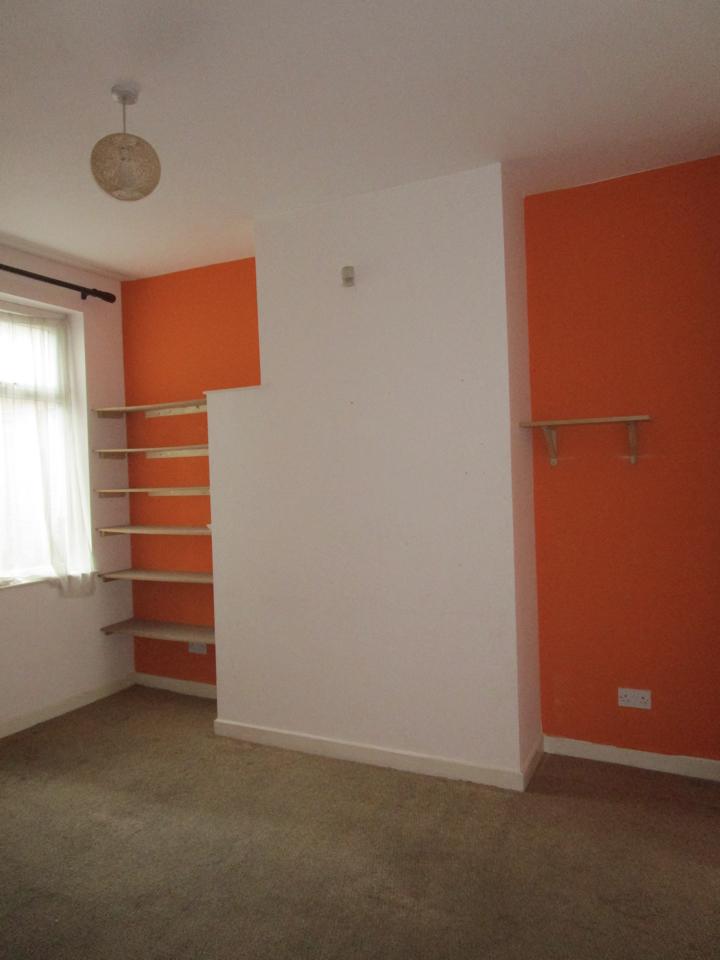
Decorating my butt off

As you can see I have never been very hot about covering stuff up while I paint. There are little smudges on the carpet in various corners, but mostly it all washes off in the end. I was determined to get to the end of the job so that I could actually enjoy being in the house, and maybe plant some stuff outside this year. Much debate has ensued about the kitchen. We had decided on yellow, but then my mind drifted to the pink spectrum and wanting something really bold. So we agreed on both (well to be honest not sure the girls cared that much)! But how to combine the two. Who wants just a plain old alternating walls thing? (It looks pretty messy but you get the idea):
Monkey suggested the diagonal lines (and we drew a plan of how to lay out the stripes), and I think it worked out fabulous. At the other end of the room I added the magnetic chalkboard paint, to create a notice board cum shopping list cum poetry collection (Monkey bought me revolutionary magnetic poetry for Christmas):
I am going to use the left overs to do the cupboard under the stairs, the only space currently unpainted.

At the front of the house I used my week off to finally get down to the rest of the living room. The back half had been completed last summer, transformed from this:
to this, including the lovely new curtains:
I did have to paint over the previous family's hight chart, that showed the growth of their kids for the years that they lived here. It was kind of sad, so I photographed it for posterity:
There was yet more orange to cover in the front:
down to the last tiny bit:
and more red to add:
though I had to mess up the other room in the process:
Tish and I swapped over the two storage units. She now has the big one in her room and the smaller white one came downstairs. I have stashed a load of stuff in the loft so that we can actually use the room, have all the craft stuff tidied away:
and a nice space in the middle to exercise in:
with a cosy nook by the radiator for people who feel the cold:

All in all I am very pleased with the outcome. I am glad we decided to treat it as one room, even though I have fabric to make a dividing curtain. It is still a bit of a dumping ground as there is no other space for the hoover and airers, but we will work on that. Little jobs remain to be completed: I realised I had not painted the space around the window in the back room, and I have plans to put up the mass of fairy lights in the front room ... but whatever, one of us might get ill so we have to isolate and then I'll have all the time in the world.


Sunday, 29 March 2020

Bookie Book Books

 'When I was Otherwise' by Stephen Benatar was a quirky little novel that I found in the charity shop. I am often attracted by the spines of books that very obviously have not been read (i.e. not creased). I found the book confusing as it jumped about in time and I was often not sure who was talking. The women, Daisy and Marsha, annoyed me and the men were just rather wet. The back cover sold it as a bit of a mystery but it wasn't. Not sure what to think really. Not someone I would bother with again.


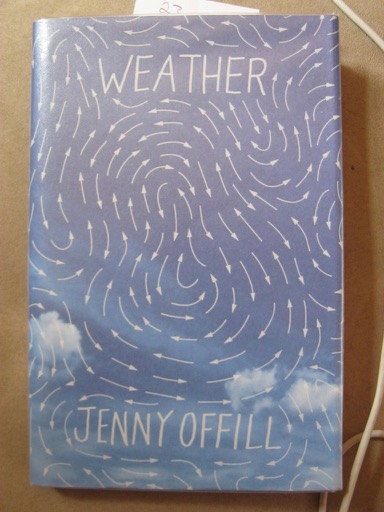
'Weather' by Jenny Offill had something for the stream-of-consciousness thing going on; the narrator Lizzie relates her life through short paragraphs containing thoughts or events. I find I read 'The Department of Speculation' five years ago and liked it. Here I give you, aptly, thoughts in the coming chaos:

"And then somehow, it's about four drinks later, and I'm telling him about the coming chaos. 'What are you afraid of?' he asks me, and the answer, of course, is dentistry, humiliation, scarcity; then he says, 'What are your most useful skills?' 'People think I'm funny, I know how to tell a story in a brisk, winning way. I try not to go on much about my discarded ambitions or how I hate hippies and the rich.' 'But in terms  of skills,' he says, and I tell him I know a few poems by heart, I recently learned how to make a long-burning candle out of a can of tune (oil-packed, not water), I've learned how to recognise a black walnut tree and that you can live on the inner bark of a birch tree if need be, I know it is important to carry chewing gum at all times for post-collapse morale and also because it suppresses the appetite and you can supposedly fish with it, but only if it is a bright colour and has sugar" (p.160)

I had several other good quotes but this is not the time. Definitely give Jenny a try.

'Starve Acre' by Andrew Michael Hurley was recommended on Dove Grey Reader, which is always an excellent place for discovering new reads. This was a very gripping, and disconcerting, book. Set in a small rural community it is the story of Richard and Juliette, who's son Ewan has died, and the weird manifestations of their grief. I reject the notion of the supernatural but find myself enjoying books that include supernatural elements, and allow myself to just accept their part in the story. Here Richard releases a hare that has resurrected itself from a skeleton he unearthed:

"For a few minutes more, he looked to catch a last glimpse of the animal, but it had become one of the itinerant shadows that moved as the wind caught the trees. It has returned to patterns of living that were impossible to understand: where every movement and every sound meant something and nothing could be ignored; not the twitch of a leaf or the odour of the earth or the sound of birds conversing across the wood. But Richard wondered if the hare in some way felt as he did that spring was always bestowed. That it was an invitation to come and watch the world moving and be among its tremors. Here in the field, those first shocks of the season were starting now. He could feel them and hear them. Beneath the trills and whistles of the blackbirds he became aware of a rushing sound. It was the beck flowing again, released from its rictus of ice." (p.125-6)

So all the library books have been automatically extended until the end of June, but the libraries were closed before I could go and pick up two requests that had just arrived. University is shut and Monkey has no volleyball, Tish is still jobless, I get to leave the house every day and talk to other people, but my skin has dried out from all the washing. We live in strange times.  I hope everyone is staying safe, has enough to read, and always remember, don't lick strangers.

Thursday, 12 March 2020

It's ok, finally, to freak out

'The Uninhabitable Earth' by David Wallace-Wells is not a read for the faint-hearted.  Here we are floating in space. So alone. Our existence 'utterly improbable':

"This is among the things cosmologists mean when they talk about the utter improbability of anything as advanced as human intelligence evolving anywhere in a universe as inhospitable to life as this one: every uninhabitable planet out there is a reminder of just how unique a set of circumstances is required to produce a climate equilibrium supportive of life. No intelligent life that we know of ever evolved, anywhere in the universe, outside the narrow Goldilocks range of temperatures that enclose all of human evolution, and that we have now left behind, probably permanently." (p.42-3)

For thirty years or more science and business have understood the nature of what is happening to our planet. Businesses did not want to tell us, as their destruction of the planet is necessary for the generation of wealth. Science was reticent, they did not want to tell us because they did not think people could be trusted:

"The terms are slippery, like any good insult, but serve to circumscribe the scope of 'reasonable' perspective on climate. Which is why scientific reticence is another reason we don't see the threat so clearly - the experts signalling strongly that it is irresponsible to communicate openly about the more worrisome possibilities for global warming, as though they didn't trust the world with the information they themselves had, or at least didn't trust the public to interpret it and respond properly. Whatever that means: it has not been thirty years since Hansen's first testimony and the establishment of the IPCC, and climate concern has traversed the small peaks and small valleys but never meaningfully jumped upwards. In terms of public response, the results are even more dismal. Within the United States, climate denial took over one of the two major parties and essentially major legislative action. Abroad, we have had a series fo high-profile conferences, treaties, and accords, but they increasingly look like so many acts of climate kabuki; emissions are still growing, unabated." (p155-6)

The supposed progress some countries have made in reducing carbon emissions has been like gathering the low-hanging fruit. The move to renewable energy sources is just the tip of the iceberg where behaviour change is concerned for the human race:

"That task, he continues, is smaller than the challenge of reducing energy demand, which is smaller than that challenge of reinventing how good and services are provided - given that global supply chains are built with dirty infrastructure and labor markets everywhere are still powered with dirty energy. There is also the need to get to zero emissions from all other sources - deforestation, agriculture, livestock, landfills. And the need to protect all human systems from the coming onslaught of natural disasters and extreme weather. And the need to erect a system of global government, or at least international cooperation, to coordinate such a project. All of which is a smaller task, Steffen says, 'than the monumental cultural undertaking of imagining together a thriving, dynamic, sustainable future that feels not only possible, but worth fighting for'." (p178)

I found this hard to get my head around because it has become where I am personally. I cannot imagine a future, cannot imagine the human race capable of making the changes needed. I have always had a positive view of human nature, that cooperation is an innate part of our makeup, but the enormity of the situation subsumes reason and hope. The book works through chapters about water, air, heat, hunger, drowning, conflict, economic collapse and the morality of the end of the world. I sank a little deeper with each page. When I searched his name I did find this article outlining reactions from scientists to his original New Yorker article (that was developed into this book) which basically accuses him of scaremongering. If you bear in mind that even the moderate, best-case scenarios are pretty disastrous I think that maybe it is time, in Greta's words, for us all to panic:

"These are the disconcerting, contradictory lessons of global warming, which counsels both human humility and human grandiosity, each drawn from the same perception of peril. The climate system that gave rise to the human species, and to everything we know of as civilization, is so fragile that it has been brought to the brink of total instability by just one generation of human activity. But that instability is also a measure of the human power that engineered it, almost by accident, and which must now stop the damage, in only as much time. If humans are responsible for the problem, they must be capable of undoing it. We have an idiomatic name for those who hold the fate of the world in their hands, as we do: gods. But for the moment, at least, most of us seem more inclined to run from the responsibility than embrace it - or even admit we see it, though it sits in front of us as plainly as a steering wheel." (p.220)

I started reading the IPCC report 18 months ago and trying to write something concise about an incredibly complex document, and gave up because it was too overwhelming. The news is pretty bad, and I think that what David Wallace-Wells does in this book is take the ideas, and some of the science, and try and put them into something understandable; how it might impact real life without all the detailed statistics that just baffle most people. You can accuse him of sensationalising, but give me that over bland reassurances any day.

p.s. a stockpile of toilet rolls is not going to help.