Showing posts with label Coursera. Show all posts

Monday, 10 October 2016

10 X 10 X 10 Giveaway post

It has been creeping up slowly over the last couple of months, but finally I have reached my 1000th post! It feels like a huge milestone, who knew I had so much to say. I decided to celebrate the things that I have enjoyed about blogging with a 10 x 10 x 10 post. 
Up first are my ten most visited posts:

10: Cool Aid Dying with 1031 visits

9: Cooking and Sewing Post with 1114 visits
8: Carol Ann Duffy with 1124 visits
7: for the home educators HESFES : long self-indulgent holiday post with 1216 visits
6: for the reptile fans Tegu Walking with 1123 visits
5: for the Philip Pullman fans Midsummer's day with Will and Lyra with 1496 visits
4: Engelby by Sebastian Faulks with 1158 visits
3: Luscious Lemon Cake with 1565 visits
2: an early poetry post, visited by many students I think Margaret Atwood Poetry with 3247 visits
1: (not quite fair on Margaret Atwood but combining two as they go together) Lizard Cake and Lizard Cake Tutorial with a total of 4985 visits

Next I give you, with much torturous decision making, my ten favourite books of the 462 that are labelled at book reviews (alphabetical for I could never rank them one to ten):


Any Human Heart by William Boyd

Austerlitz by W.G. Sebald
Care of Wooden Floors by Will Wiles
Fugitive Pieces by Anne Michaels
The Goldfinch by Donna Tartt
The Lacuna by Barbara Kingsolver
The Luminaries by Eleanor Catton
The Road by Cormac McCarthy
The Wasp Factory by Iain Banks
Words from a Glass Bubble by Vanessa Gebbie

And the final ten posts are the ten that I love, either because they mark significant things that have happened over the last few years or just times when I wrote something important to me or that I was particularly pleased with:


Don't Apologise speaks for itself, I was angry, I should write like that more often.

Nostalgia ain't what it used to be is a brief post that celebrates 15 years of friendship with the Ridley Birks family. 
Two Deaths, Three Kisses and a Punchup was written in 2011 when I blogged for the Library Theatre's production of Hard Times
Monkey Quilt the Final Chapter is the result of over two years working on our beekeeper's quilt.
Favourite Moments gives the best bits from my visit to Costa Rica with my mum in 2014.
Dead Dog Poems is one of many many post written during my longstanding involvement with the Manchester Literature Festival, it was one of my favourite events.
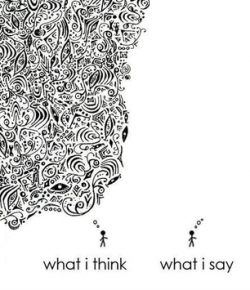
What I Think is a course review of 'A Brief History of Humankind', of the many courses I have done with Coursera since 2013 it was the most interesting and engaging.
Night of Writing Dangerously: Monkey and I have participated in NaNoWriMo several times, and are planning to again this year.
Luggage: I have taken part in the Blogging from A to Z Challenge every year since 2012, several years I have done flash fictions, and this is one I particularly liked.
Blogger (a poem) that I wrote back in 2010


I hummed and hawed about what to do to celebrate, and thought that of course there should be a give-away. I know people visit when I post stuff and I hope you get some interest or enjoyment out of reading but I thought it might be nice to know who you all are. So here are three outrageously unique tote bags that I made for my short-lived Etsy shop, so maybe if people just say hi and leave their email contact/blog link and I will pick three people at random to send them to.
Red and Black flocked satin lined with white cotton.
Brown satin with gold spirals lined with pale pink satin.
Pink paisley satin lined with pale pink satin.


Sunday, 9 October 2016

Literary failures and successes

I have admitted defeat (for the time being) with Gravity's Rainbow by Thomas Pynchon. I picked it up in the library on the spur of the moment and struggled with it for a fortnight, but it is impenetrable. Even though there is a wiki specifically designed to lead you through the finer points of the novel I decided that this is just not the right time for me to tackle something that needs an explanation of what is happening in each paragraph. Maybe when I have a year with nothing better to do, or when the arthritis has removed my ability to do anything other than read, or perhaps I'll get one of my grandchildren to read it to me as I lie on my deathbed. Anyway, I'm sure I'll give it another go at some point. 

On the plus side the Manchester Literature Festival is now well under way. I went to my first event last month however, one of the preview events, that saw my wonderful Professor Harari visiting to promote his new book. I did his Coursera course, 'A Brief History of Human Kind' three years ago (unfortunately it no longer seems to be available) and I was so excited to discover he was going to be coming to the festival. His new book, Homo Deus, is an examination of where the human race might be headed next.
I was a little starstruck when I went to get him to sign his book and managed to mumble something barely intelligible about how much I had enjoyed the course, but it was really lovely to see him in person, and he was just like he seemed in the online lectures. 
Last night I did my second event; the most wonderful Lemn Sissay was performing as part of the 8th annual Black and Asian Writers Conference organised by Cultureword at the Contact Theatre. I confess I had not heard any of his poetry previously but knew of him after he was elected Chancellor of Manchester University last year. He approached me in the foyer when he arrived, because I was wearing a MLF volunteer t-shirt, and asked about books for sale, and he was very distressed to find that, due to some very poor communication, there were none. The event, nevertheless, was a roaring success, sold out, and he was so funny and engaging and chatted on during the question and answer session way past the official finish time. 
His new collection is called 'Gold from the Stone'.
I will just give you this poem, called 'Some things I like', which is quite a good example of his style and delivery, though this video is from a couple of years ago. 

Thursday, 28 May 2015

Kierkegaard and all that

I have been doing a few more Coursera courses over the last few months, having started several last year but not completed any. The course on Kierkegaard was another that I did not complete, put off partly by the fact that I was supposed to write a real essay to pass the course, but also by the utterly unreadable nature of his writings. So I borrowed 'Kierkegaard: A guide for the perplexed' by Claire Carlisle from the library, since the lectures were interesting and I followed enough to feel that he had something significant to impart.

The thing that strikes you is how learning about Kierkegaard the man is vital to understanding his way of thinking (second only to learning how to spell his name of course). What is most interesting is that he doesn't think of philosophy as some kind of abstract ideas, but as integral to being human:
"Instead of excluding his personal life from his intellectual work, he turned his experiences of love, suffering, spiritual weakness, moral conflict and despair into philosophical problems, and insisted that these could not be addressed through rational, abstract thought. Kierkegaard argues that objectivity is dishonest and unable to capture what is most fundamental to human existence, because before anybody becomes a philosopher - and even, in fact, before they start to think about anything - they are already an 'existing individual' who lives, breathes and moves continually closer to death. The idea of an 'existing individual' is absolutely central to Kierkegaard's philosophy, but of course this is more than just an idea, and abstract concepts fail to capture the vitality and fluidity of life." (p.15)

There is much debate about the distinction between the person he was and the person he presents as in his writing; was he trying to create alternate personas for himself, or is it the case that it allowed him to posit all kinds of potentially unpopular views and arguments. The vast majority of his writings were published under a series of pseudonyms. He argued that the aim was to distance himself from the reader so he would not be viewed as some kind of authority figure. Heavily influenced by the thought of Socrates his aim was not to present a coherent package of ideas or 'truths' but to lead students to find the truth for themselves. He did not want to tell people how they should live, but encourage them to think for themselves.
"One of his priorities is to awaken readers to their capacity for choice, and by refusing the role of author and authority-figure he is giving the reader the opportunity to exercise her freedom." (p.38)

Kierkegaard's critique of Hegel, an important and influential german philosopher of the time, was an ongoing theme in much of his writing; his influence is significant if you consider how much time and effort Kierkegaard put into it (here talking about Either/Or).
"By dramatising the philosophical debates of his contemporaries, he takes the issues out of the purely reflective, theoretical context, and into actual existence. There is  in Kierkegaard's thought an attempt to move beyond academic philosophy, as well as to criticise Hegelian ideas in particular. This means that his relationship to both philosophical traditions and the academic world is rather ambiguous: on the one hand he draws from concepts created by other philosophers, which were already topical - such as Aristotle's principle of contradiction - but on the other hand he uses these concepts to argue that philosophy cannot express the whole truth about human existence." (p.56)

He wanted to shift the focus of thinking away from Hegel's insistence on objective truth, for Kierkegaard the 'inwardness' of the individual was all important. As the book points out, "Kierkegaard's philosophy reflects a common experience of feeling occasionally at odds with the world and unable to express oneself fully within it", and perhaps this is why he has come to be linked so closely with 20th century existential philosophy. For him subjectivity was more significant:
"'Subjectivity is truth' means that truth is a way of being a subject, or a way of existing as a human being. Kierkegaard says that subjective truth is a matter of how - how one lives - whereas objective truth is a matter of what one knows or believes." (p.68)
However:
"Right through Kierkegaard's authorship there runs the claim that, from an existential point of view, intellectual reflection alone is unable to reach the goals of ethical and religious life. Religious faith is presented as a greater task and a rarer achievement than rational thought." (p.61)
I begin to loose contact with him at this point because he moves off into the realm of theology and I skimmed though the last part of the book. In the same way that Descartes came up with all sorts of interesting challenges to mainstream thinking of the day, he baulks at actually questioning the existence of god. Challenging the doctrines of the church is one thing, anything that might undermine their essential message is quite another. There are some interesting introduction to critiques of Kierkegaard on his Wikipedia page if you are interested. So, a very interesting person, privileged by his independent wealth to spend his life thinking about what it means to be human, something that we should all do from time to time.
"He wrote a book on the topic, with a title that summed up his quandary: Either / Or. Either get married to Regine or don’t get married. What’s it best to do? Settle down to family life? Or look for someone else? Stay single? Or settle for what you know already? After a year of agony (of angst), he broke off the engagement. But he pined for Regine nevertheless, leading to a memorable outburst: 'Marry, and you will regret it; don’t marry, you will also regret it; marry or don’t marry, you will regret it either way. Laugh at the world’s foolishness, you will regret it; weep over it, you will regret that too… Hang yourself, you will regret it; do not hang yourself, and you will regret that too; hang yourself or don’t hang yourself, you’ll regret it either way; whether you hang yourself or do not hang yourself, you will regret both. This, gentlemen, is the essence of all philosophy.' "(Quoted from The Philosopher's Mail)

Monday, 3 March 2014

Sewing, Knitting, Spanish and Morality - a catchup post

I feel like I have not posted much recently. Life has escaped me, mainly, if I am honest, because of too much Words With Friends. But on the plus side my brain has still been working hard. I have been doing another Coursera course on 'The Moralities of Everyday Life' with Paul Bloom (see an interesting Ted talk by him here). It has looked at the hows and whys of the moral choices and decisions that human beings make, whether there is such a thing as moral absolutes, the impact of different cultures on morality. It has all been very interesting. A few choice articles that we were sent to read:

I have also been learning Spanish with Duolingo in preparation for a grand adventure that I am taking with my mum in a couple of months; 'Yo no como queso' being my most useful phrase so far, but I am hoping to master more important stuff by the time we are due to head off into the rainforest.

This lovely jumper for the Monkey has been taking a while, it was started just after Christmas. The pattern is called Elfe, though it will be adapted to have long sleeves and it is knitted in green Admiral and variegated orange/red Zauberball both from Schoppel
I got a nice lump sum in my wages the other week after Royal Mail and the CWU finally agreed last year's pay deal and we got our back dated pay increase, so I treated myself to a selection of Rowan Colourspun, Sublime Tussah Silk and Luxurious Tweed:
which will hopefully become something like this (Bute from Rowan 52 magazine), though I am going to make it a sweater not a cardigan. Having enjoyed my forays into cabling I thought a bit of fairisle would be a good challenge:
In other news we have started a 'Monkey Fund' to raise money for the Monkey's fees for next year (Year of the Monkey). I have already made nearly £100 selling Sylvanians, Playmobil and clothing on Ebay. My collection of duvet covers, which will go up in an Etsy shop as soon as I get organised, have been listed as well but not sold yet. You can see the entire selection here


I also made a couple of batiked cotton shopping bags that will also go up on Etsy and have plans for all sorts of other crafty stuff. Add to that we now have a deadline for finishing the Beekeeper Quilt, it's about 97 hexipuffs and counting. It's going to be a busy few months.

Wednesday, 12 February 2014

What I think

I would like to be one of those bloggers who says what they think. Mostly I say, look at this book, it's really good. The internet is full of people shouting their thoughts at the planet, so much noise. I have my little corner and sit here writing about books. But I have strong feelings and opinions about just about everything, I just don't put them here. Maybe I should. Today I will pass 100,000 blogviews and it feels quite a milestone. The blog is now averaging over 100 visitors a day. I know it's tiny in the grand scale of the interweb but it's big to me. So welcome and thank you to all of today's visitors.

I recently changed my opinion about the World Bank. When I did my degree thirty years ago they and the IMF were the bugbears of lefty thinking students. And quite rightly. They were mired in the Thatcherist/Reganist economics of the eighties, obsessed with forcing right wing economic policies on developing countries in exchange for meagre loans which really only benefitted the western economies and did nothing for the poor. But I have been doing a Coursera course on 'How to Change the World' and I learned some things (from the now president who used to campaign to have it shut down) about how it is finally working to do some good. I think it's important that education should do that. I learned something new that gave me a different perspective.


Over the autumn I was doing another course entitled 'A Brief History of Humankind' (with the wonderful Dr Harari). It was so completely fascinating that when it is offered again I think you should go and do it (I mean you could just listen to the lectures, it's only a couple of hours a week and they would be well spent. Well, it is quite a commitment, it is 17 weeks long, but he is so utterly engaging, not in a brash, charismatic way, but subtle and low key, in what he talks about not the way that he talks. His book, 'From Animals into Gods', has been translated but is currently out of print.) He recommended to us 'Guns, Germs and Steel' By Jared Diamond which I have been reading very slowly with my breakfast ever since. Both the course and the book are trying to answer the question of why the world is the way it is. How did homo sapiens leave Africa and spread over the planet? Why and how did we move from being hunter-gatherers to being settled farmers? How did complex societies evolve? Why did eurasian societies 'develop' faster and come to conquer and dominate the other continents? It is history but not of the 'who did what and when?' type but of much bigger questions of the nature of human societies and our relationship with our environment.

This book covers much of the same ground as the course so I just thought I would write a bit about things that interested me, some of this taken from the lecture notes I wrote, some from reading. I came to the conclusion that human cultural development is determined by stories. Physically and mentally we are pretty much the same creatures that inhabited the planet 70,000 years ago, so how come our 'society' has changed so much when other animals live now in exactly the same way that they have always done. The thing that marks out human beings from other intelligent animals is not just our language but the way that we use our language. We have what Dr Harari called 'fictive language', that we use to describe things that do not exist, to imagine things outside our own physical world and direct experience. These 'stories' that early humans created about the world were what bonded them together, and it has been stories that continue to guide the way we live our lives. Somehow humans managed to cross a threshold and set up cites of thousands and empires of millions of people. We find that all large scale cooperative groups are rooted in commonly held fictions about the world ;  stories that exist in the collective imaginations of the people. Churches are ultimate example of this, the knowledge that the other person believes the same things that you do means you will work with them. The 'nation state' is another example. Judicial systems are rooted in common legal 'myths' about the laws and what is allowed within the society, in justice and rights. But none of these things exist outside the stories that human beings invent and tell each other. There is no law or justice or gods or countries or money outside the common imagination of the human beings involved and the stories that we tell each other. Money was the really big example of human beings ability to cooperate in large groups. For all the things we disagree on as a species the one thing the entire planet agrees on is money, what it is, what we use it for, wherever you go you can buy and sell things for money. We modern humans like to look back and think that primitive societies were founded on shared crazy beliefs in ghosts or sun gods or whatever that bonded their societies together ... but we fail to see that our own modern societies work in exactly the same way.  Modern lawyers are just like ancient shamans only they tell even more outrageous stories. Modern society is based on things that are founded only in the common human imagination. We can change our stories quite dramatically and thus change our societies. Genetic evolution is very slow, it takes thousands or even millions of years to make a change in the behaviour of animals. This story telling allows humans to bypass this evolution and cultural evolution can make very swift changes in our behaviour and societies. This is how we outstripped all other species in our ability to change. He argues that perhaps homo sapiens outcompeting the Neanderthals was the first incidence of genocide, though interestingly most populations on the planet have some Neanderthal DNA.


I was inspired to write about this today by this image that came in my news feed yesterday (and that is a brilliant website) that shows a 900 year old viking rune that apparently says 'kiss me'. I have been reading the chapters on writing and it is an example of human ingenuity it is the best. It is one of the few aspects of human evolution that has been shown to have arisen in only very few places independently (most notably Sumerian cuneiform) and that most writing systems are adaptations and developments of these:

"We know that the development of Sumerian writing took at least hundreds, probably thousands, of years. As we shall see, the prerequisites for those developments consisted of several features of human society that determined whether a society would find writing useful, and whether the society would support the necessary specialist scribes. Many other human societies besides those of the Sumerians and the early Mexicans - such as those in ancient India, Crete, and Ethiopia - evolved these prerequisites. However, the Sumerian and early Mexicans happened to have been the first to evolve them in the Old World and the New World respectively. Once the Sumerians and early Mexicans had invented writing, the details or principles of their writing spread rapidly to other societies, before they could go through the necessary centuries or millennia of independent experimentation with writing themselves. Thus, that potential for other, independent experiments was preempted or aborted." (p.224)

Diamond describes two ways in which writing spread; 'blueprint copying', where the system of writing was copied and adapted directly, and 'idea diffusion', where the concept of 'writing' was known as a basic that then encouraged people to come up with new systems of their own. Similar debates have been had about the spread of other human inventions, including wheels, gunpowder and pyramids.
He then goes on to argue:

"A related limitation is that few people ever learned to write these early scripts. Knowledge of writing was confined to professional scribes in the employ of the king or temple. For instance, there is no hint that Linear B was used or understood by any Mycenaean Greek beyond small cadres of palace bureaucrats. Since individual Linear B scribes can be distinguished by their handwriting on preserved documents, we can say that all preserved Linear B documents from the palaces of Knossos and Pylos are the work of a mere 75 and 40 scribes, respectively.
The uses of these telegraphic, clumsy, ambiguous early scripts were as restricted as the numbers of their users. Anyone hoping to discover how Sumerians of 3000BC thought and felt is in for a disappointment. Instead, the first Sumerian texts are emotionless accounts of palace and temple bureaucrats. About 90% of the tablets in the earliest known Sumerian archives, from the city of Uruk, are clerical records of goods paid in, workers given rations, and agricultural products distributed. Only later, as Sumerians progressed beyond logograms to phonetic writing, did they begin to write prose narratives, such as propaganda and myths." (p.234)
"The kings and priests of ancient Sumer wanted writing to be used by professionals scribes to record the number of sheep owed in taxes, not by the masses to write poetry and hatch plots. As the anthropologist claude Lévi-Strauss put it, ancient writing's main function was to 'facilitate the enslavement of other human beings.' Personal uses of writing by nonprofessionals come only much later, as writing systems grew simpler and more expressive." (p.135)

It is like the perfect example of the maxim 'knowledge is power'. The storing and transmission of accurate information gave elites control. But the way that the Vikings used runes, as in the image, shows that you can't keep control of such a powerful idea as writing and that in the end people will use it for things that matter to them. I read out to Dunk the wonderful story that is given in the book of Sequoyah, a Cherokee, who, armed with the mere knowledge that writing was something useful to white people, went about creating a writing system for his own language using a combination of letter symbols from other languages. It is an amazing and inspiring story though the wiki page does not say if his writing system is still in use.

This was just to give you a taste of the fascinating stuff I have been learning. It has all been very thought provoking and I haven't even touched on the complex relationships between geography, climate and the domestication of plants and animals or role played by the 'germs' - the 'conquering' of the New World had nothing to do with superiority over 'savages', little to do with European weaponry, and everything to do with the diseases they bought with them that wiped out vast swathes of the indigenous populations. The only trouble with such books (and the course as well) is that they raise as many questions as they answer and the reading list the Dr Harari gives with the syllabus would take you a decade of serious study to get through. Knowing one thing just prompts you to want to know the next thing, so Dunk and I have just been reading about Gondwana and Sahul Shelf which, during the last ice age, allowed homo sapiens to cross to Australia. Am off back to Coursera now to do my lectures for 'The Moralities of Everyday Life'. 

Saturday, 24 August 2013

Ceci est ma femme

Over the summer Creature and I had been doing an Introduction to Psychology course on Coursera (I know I've mentioned Coursera several time recently, it seems to have appropriated rather a great deal of my time these days) and Steve (the exuberant Canadian tutor) recommended 'The man who mistook his wife for a hat' by Oliver Sacks as a good read.
While psychology isn't entirely about brain problems the fact is that psychologists seem to have learned most about brain function by studying the many and various ways in which it can go wrong. While this was a fascinating read, and certainly Mr Sacks has made a career out of writing and talking about the many and various ways the human mind can go awry, I was left not quite knowing what this teaches us about the way normal minds work. The book is divided into sections that focus on losses and excesses, people with temporary interruptions to normality and then others who have a whole different 'normality'. He takes us through a catalogue of different types of memory loss and altered perception, a variety of quirks and ticks, visions and hallucinations and totally different ways of understanding the world. I was left feeling slightly perturbed, as if I had just visited a freak show and was invited to gawp at the curious individuals inside, except that they had mental rather than physical peculiarities. So often it seemed nothing could be done and the people involved were often trapped inside the new version of reality that their brain perceived. Mostly they served to make you grateful for wholeness. Here he talks with Jimmie, a man who, through alcoholism, has lost 30 years of memory and exists believing it is 1945 and he is a young man:

"One day I asked him not about his memory or past, but about the simplest and most elemental feeling of all:
'How do you feel?'
'How do I feel,' he repeated, and scratched his head. 'I cannot say I feel ill. But I cannot say I feel well. I cannot say I feel anything at all.'
'Are you miserable?' I continued.
'Can't say I am.'
'Do you enjoy life?'
'I can't say I do...'
I hesitated, fearing that I was going down too far, that I might be stripping a man down to some hidden, unacknowledgeable, unbearable despair.
'You don't enjoy life,' I repeated, hesitating somewhat. 'How then do you feel about life?'
'I can't say that I feel anything at all.'
'You feel alive though?'
'Feel alive? Not really. I haven't felt alive for a very long time.'
His face wore a look of infinite sadness and resignation." (p.34-5)

Certainly a very readable book however, thought provoking and a window of sorts into the workings of the human mind.

Sunday, 30 June 2013

A Tropical Garden in Chorlton

So there is this course on Coursera called Introduction to Art that I have been doing for the last few weeks. This week's project was to make a 'site specific installation', and I decided to inflict my creative juices on the Ridley Birks family. The primary aim was to create a surprise and brighten everyone's day, and make up for the miserable damp grey June we have had.
So here is how their front garden looked at 4.30am today:
and this is how it looked at 5.30am:
Adorned with 158 meticulously created tissue paper flowers, and some felted butterflies. 


The Babe enjoying the flowers

With grateful thanks for the assistance of Creature who went to Fred Aldous to buy the first batch of paper (since I was housebound on Thursday), Dunk who went out late yesterday to get a second batch, and to Tish who sat with me for several hours yesterday afternoon and evening and helped make flowers.


Friday, 24 May 2013

Getting to know myself...

... or am I a figment of my own imagination?
A while ago I was pointed in the direction of the Coursera website, it offers university level courses, for free, to students all over the world, mostly pitched at people without prior knowledge and who are armed merely with a curious mind. So since March I have being studying a course entitled Know Thyself that has encompassed a variety of disciplines, but tutored by a philosopher, Mitch Green.

The first thing that the course has given me is a profound awe for the human mind. It is oh so much more sophisticated than most people appreciate. Secondly I feel cleverer just studying philosophy, and I discover this is because the concept of 'philosophy' is positively somatically marked, the word is linked in your mind with all sorts of associations that imply intelligence. We started the course with the work of Socrates and the notion that 'the unexamined life is not worth living', or as an alternative translation suggests, is 'not to be lived', taking pains to point out that Socrates probably was not advocating a cull of thoughtless people, just that their lives lacked some quality if they went about never considering the what or why of their thoughts, beliefs or actions. As a philosopher I am not sure he is such a great example, he tends to live up to the stereotype of the aloof, 'disconnected from the real world' kind of philosopher, that had given philosophy an undeserved bad name, but he was prepared to die for the idea that he should be allowed to question everything, so all credit to him in my book. Descartes on the other hand was a bit of a chicken and having made a very convincing case for the existence of a human consciousness as the basis for all knowledge (I think therefore I am) he then goes and spoils it by arguing that god exists, mostly because saying that he didn't was not socially acceptable at the time. I found myself at odds with the dualist notion of the separation of the mind and the body, influenced partly by the religious overtones but also by my reading of 'Still Alice' at the time; where Descartes says the mind can exist beyond the death of the body, but not vice versa, what I learned about Alzheimer's Disease seems to imply that the body is perfectly able to live even when everything that makes up the human mind, the thoughts, memories, instincts, wishes, all cognitive functions, have ceased to operate.

Lots of different theorists have different views on what constitutes the human mind; for Descartes our mind is our ability to reason, for Gilbert Ryle we are made up of a collection of 'dispositions' to behaviour, then for Freud our minds are made up of the Ego, the Id and the Superego. The study of the brain has often focussed on learning about it's function by seeing what happens to it when things go wrong, either with physical brain damage or mental illness. But many of them came back to the idea of introspection, Socrates' notion of an examined life, that to understand your own behaviour and actions you must examine your thoughts and attitudes. Although much of Freud's theories about human nature have been discredited psychotherapy remains an important mechanism to understanding the human mind. Different theories emerged about the unconscious and our ability to understand what goes on in the part of the mind that we are often unaware of. What emerged also was the notion of the interdependence between mind and body, between thoughts and actions, each impacting upon the other and also between our supposed rationality and our emotions. It has only been much more recently that  neuroscience has progressed and we have more and more knowledge about the inner workings of the brain on a cellular level.  I am still reading Antonio Damasio's book 'Descartes Error' which turns on it's head the idea that human beings should or do make decisions based on rationally choosing the best outcome and that allowing emotions to intervene is necessarily a bad thing, but this book makes use of  knowledge about the functioning of regions of the brain for different purposes (review coming of this book at some point, hopefully soon).

Having morphed from a philosophy into more of a psychology course and drifted briefly into neuroscience, we went back to examining the idea of deception and self-deception, not just in terms of lying but more subtly in terms of your internal spin-doctor who helps you make the best of life when it's really not that great. And finally to Buddhism and Zen and how it is more in rejecting the notion of 'self' that we can come to any sense of meaning.

I have been trying to write something of an overview of what I learned but find that although I enjoyed it the ideas were all very discrete, different views at how we humans have considered our own minds. There is a 'Cartesian View' or a 'Freudian View' or a 'Buddhist View' of the human mind, they are separate paradigms and do not lead one to another, nor did each necessarily help in understanding the next. I found that the most helpful thing were the questions that Mitch posed at the beginning and end of the course, that he told his students to always ask about any idea: What do you mean? and How do you know? You should be able to challenge yourself to question the theories and ideas that you hold and reason with yourself about them. I especially like the concept of 'Occam's razor' which states that 'among competing hypotheses, the hypothesis with the fewest assumptions should be selected.' The human mind is an amalgam of all the assumption it has acquired through experiences, many of them very flawed, and trying to figure out which is most of the battle. I am left with the feeling that to know your own mind certainly could be the work of a lifetime, and if you focus inwards too much you might be both tying yourself up in knots and missing something much more important outside.  What I liked most was that it felt like real studying; video lectures prepared specifically for the course, suggested reading, online discussions and feedback. It had to be done within the course schedule and there were weekly tests to see if you had paid attention and understood the concepts in the lectures so you had to treat it seriously if you wanted to 'pass'. Of the 70,000 odd who signed up apparently less than 10,000 were still actively participating at the end. Creature and I have since begun an Introduction to Psychology course together and will be starting 'Introduction to Art' next week too. I have several more in the pipeline that start later in the year. I would highly recommend it to anyone either just wanting to try something new or interested in getting back into formal education.